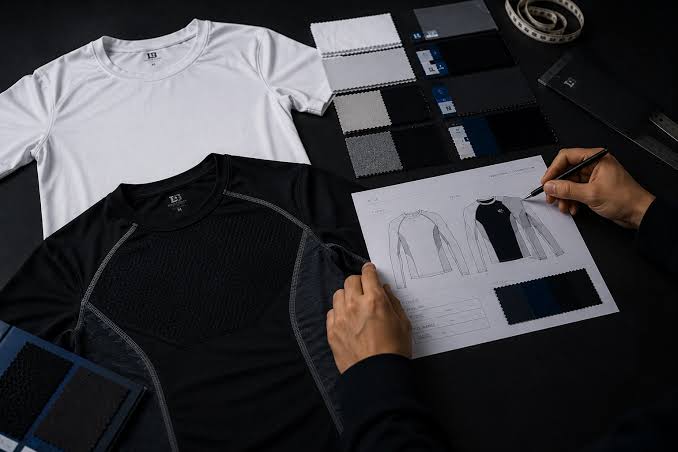
Learn how to engineer custom performance sportswear. Complete B2B guide covering moisture-wicking fabrics, compression blends, dye sublimation, and flatlock seam construction.
Manufacturing commercial-grade sportswear and performance activewear requires a strict balance of technical fabric engineering, ergonomic patterning, and high-durability decoration. Unlike standard casual apparel, athletic wear must endure intense physical stress, moisture management, and repeated wash cycles without losing stretch or color vibrancy. This guide details the essential technical standards required to manufacture market-ready activewear and team sportswear.
1. Performance Fabric Selection & Technical Blends
The foundation of high-performance sportswear lies in synthetic fiber engineering and GSM selection:
- Moisture-Wicking Polyester/Spandex (220–280 GSM): 4-way stretch interlock fabric designed for maximum mobility, rapid sweat evaporation, and shape retention in training wear.
- High-Compression Fabrics (280–350 GSM): Nylon/Elastane blends offering targeted muscular support, improved blood circulation, and opaque squat-proof coverage for leggings and base layers.
- Breathable Jacquard & Pin-Dot Mesh (140–180 GSM): Ultra-lightweight polyester mesh inserts mapped to high-sweat zones (underarms, back panels) for optimal airflow.
2. Advanced Decoration: Sublimation vs. Heat Transfer
Selecting the correct branding method ensures logos and custom patterns withstand active stretch:
- Full-Dye Sublimation Printing: Fuses eco-friendly Italian sublimation inks directly into polyester fibers at high temperatures. Delivers vibrant, zero-bleed graphics that never crack, peel, or fade.
- 3D Silicone & Raised Rubber Badges: Heat-applied tactile brand logos that stretch alongside performance fabrics without tearing or lifting.
- 3M Reflective Accents: Heat-sealed high-visibility strips and logos engineered for night sports and outdoor training safety.
3. Ergonomic Construction & Seam Durability
- Flatlock Seam Stitching (4-Needle 6-Thread): Creates smooth, flat internal seams that eliminate skin chafing during high-friction athletic movement.
- Articulated Panel & Gusset Engineering: Diamond-shaped crotch gussets and raglan sleeve cuts provide 360-degree range of motion without garment distortion.
- Reinforced Bar-Tacking: High-density stress-point stitching applied to pocket edges, waistbands, and zipper terminals for heavy athletic durability.
4. Quality Control & Performance Testing Standards
Before launching bulk production, ensure your custom samples pass these critical performance tests:
- Colorfastness to Perspiration & Washing: ISO-certified testing ensuring dye stability against salt and detergent exposure.
- Elasticity Recovery Rate: Verifying fabric snaps back to original dimensions after maximum stretch testing.
- Anti-Pilling & Abrasion Resistance: Ensuring surface fibers resist friction from gym equipment, Velcro, and protective sports gear.
5. Preparing B2B Team & Activewear Tech Packs
Streamline custom manufacturing by including precise production requirements in your tech packs:
- Comprehensive size grading charts accommodating athletic fit profiles (Youth, Unisex, Women’s Pro-Fit).
- Vector artwork files (AI/PDF) mapped onto flat 2D pattern layouts with Pantone (PMS) color references.
- Roster data spreadsheets for customized player names, numbers, and specific size assignments.